I love trying out new techniques with my students! This was a new twist on an old favorite- African masks with some sgraffito patterns! We began by working out sketches of African masks- we looked at different examples of masks from Africa and talked about why they looked the way they do. We examined the materials used and the different ceremonies the masks are used for as well. Students then drew half the mask on a folded paper and rubbed it out to transfer to the other half. After the mask was drawn and completely symmetrical, students colored them in using oil pastels. I gave students the option of using a color scheme or using any colors they wanted. The final step was to use a pick to etch patterns into the pastels. This created a cool sgraffito effect that the kids loved.
Showing posts with label african. Show all posts
Friday, February 2, 2018
Friday, November 14, 2014
African Animal Symbols
Students in grades 7 and 8 created these African animal symbols to coincide with the International Academy's global focus on West Africa. We began by reading about African art and how it is primarily made to communicate messages usually within the spirit world. Artists drew an African animal symbol on drawing paper, then traced the animal onto another sheet of paper. After the first was colored in marker, students colored in the second with the opposite or complementary color. When finished, one drawing was cut into a loom and the other drawing was cut into half inch strips. These were then woven into each other to create a contrasting color effect. The final step was to add a border of Adinkra symbols. These are symbols used in Africa to symbolize positive ideals like strength, wisdom, love, etc. This was a great in depth project that incorporates drawing, weaving, printmaking and culture.
Thursday, May 16, 2013
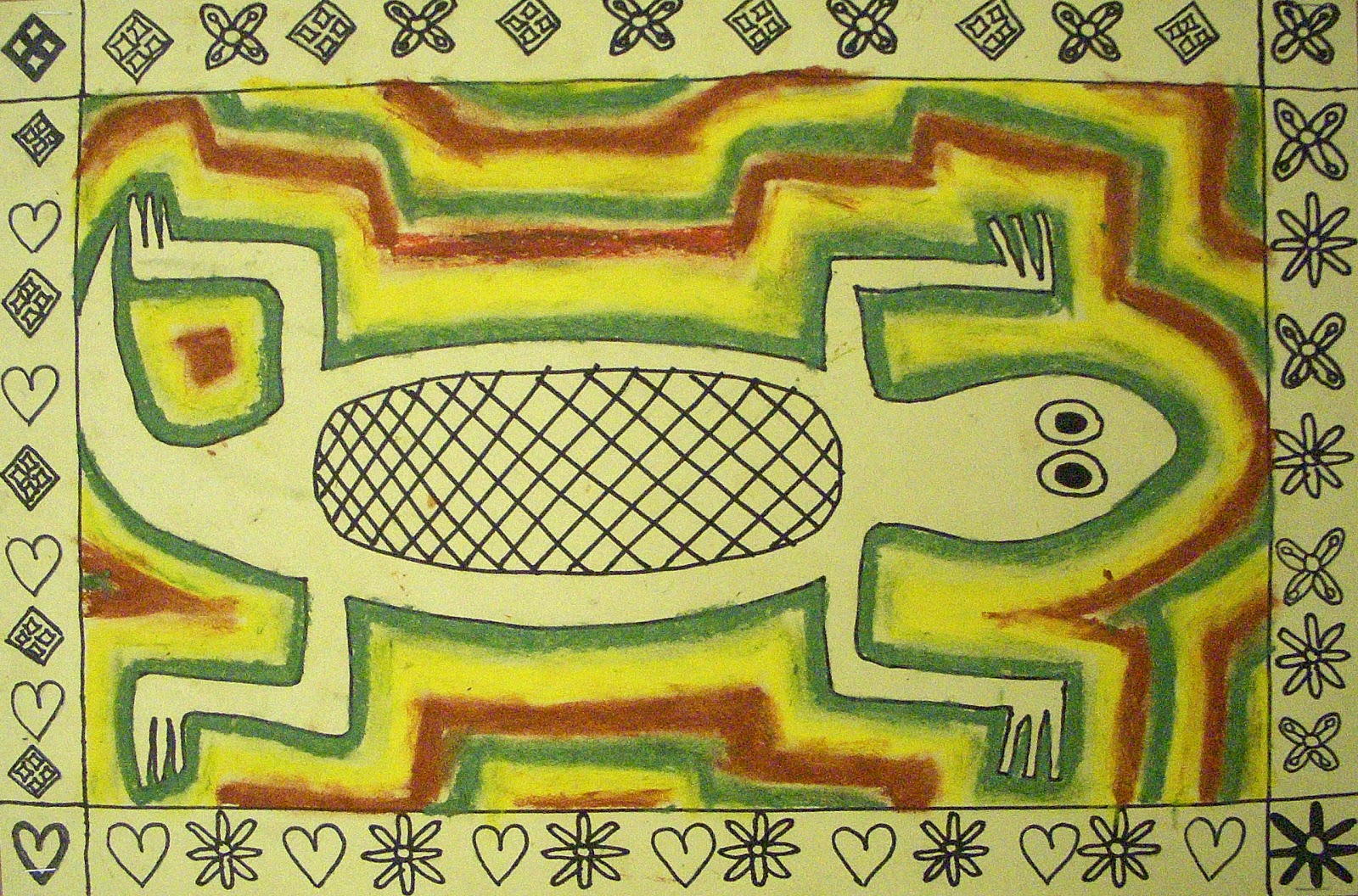
Senofo Spirit Animals
The Senufo people of West Africa’s Ivory Coast are renowned for their cloth paintings. They believe their artwork has special meaning and helps protect them in their daily lives. Design motifs usually include birds, snakes, fish, frogs, crocodiles, and turtles as seen from above or side, covered with lots of geometric patterns. 4-6 students created their own spirit animals and created the various geometric designs around the border and in the animal. The background was colored with oil pastels in a blending pattern.
Tuesday, February 7, 2012
Watercolor Giraffes!
Monday, January 23, 2012
Egyptian Symmetry
The first step in this lesson is to read about the art of Egypt and really examine the different characteristics and their use of symbols. I have the students draw out a design on a small sheet of paper, giving them the option of being realistic or more abstract. These designs are then transferred onto a larger paper four times creating a symmetrically balanced composition. I had the students color in the symbols and figures with marker, then the background was filled in with gold paint. We then created a border around the entire composition using styrofoam stamps of a heiroglyphic.
Friday, January 20, 2012
African Sunsets
The 1st through 3rd grade classes recently completed this amazing silhouette project. We began with a lesson on color blending. We looked at the color wheel and discussed how colors could be blended if they are next to each other on the color wheel. We looked at a picture of a sunset and noticed the gradual color shift from yellow to orange to red. The students then painted using watercolors and tried to mimic this gradual color shift.
During the second class, students choose an animal to include in their drawing. Some of their options were zebras, giraffes, elephants and monkeys. We drew the animal over top of the painting and then painted the animal, ground and a tree in black. This gives the painting a great silhouette that really feels like the sun is setting in the background. I read the African folktale Anansi the Spider and told the students to focus on the pictures and designs in the story. We then created a similar design along one edge of the painting.
On the final day, we began by using a marker to clean up the edges of the black paint. Because the silhouette is so important, all the edges need to be very clear and smooth. We then created a native African figure and included it in the painting. We looked at some images from Masai natives and took note of the way they dressed, the types of jewelry they wore and their hair.
The final product is both visually stunning and a great introduction into the land of Africa!
Subscribe to:
Posts (Atom)